
Walk into any supplement store or browse online, and you’ll find hundreds of protein powders claiming to be the “best.” Whey isolate, concentrate, plant protein, mass gainers, hydrolyzed protein—the options seem endless.
The truth is simple: protein supplements are not magic powders. They are convenient nutritional tools designed to help you meet your daily protein requirements when whole foods alone aren’t enough.
Whether you’re a beginner stepping into the gym for the first time, a professional athlete, or someone simply trying to maintain a healthier lifestyle, understanding protein supplements can help you achieve better results while avoiding unnecessary confusion.
Let’s separate facts from marketing hype and discover how protein supplementation can support your fitness goals.
Why Protein Matters More Than You Think
Every movement your body makes depends on protein.
Your muscles, skin, hair, nails, enzymes, hormones, and immune system all rely on amino acids—the building blocks of protein.
When you exercise, especially resistance training, tiny muscle fibers experience stress. Your body repairs these fibers using dietary protein, making them stronger over time.
Without sufficient protein intake, your body struggles to recover efficiently, potentially slowing muscle growth and increasing recovery time.
Protein also plays a significant role in:
- Muscle recovery
- Muscle growth
- Weight management
- Increased satiety
- Improved metabolic function
- Bone health
- Healthy aging
Simply put, protein isn’t only for bodybuilders—it’s an essential nutrient for everyone.
Do You Actually Need Protein Supplements?
Here’s an important fact:
Protein supplements are supplements, not meal replacements.
If you’re already consuming enough high-quality protein from foods such as chicken, eggs, fish, dairy products, lentils, beans, tofu, soy, and paneer, you may not need additional supplementation.
However, many people struggle to consistently meet their daily protein requirements due to busy schedules, work commitments, travel, or dietary preferences.
That’s where protein powder becomes incredibly useful.
It offers:
- Convenience
- Fast preparation
- High-quality protein
- Easy digestion
- Consistent nutrition
A protein shake can be prepared in under a minute, making it one of the easiest ways to support your nutrition goals.
Benefits of High-Quality Protein Supplements
1. Supports Muscle Recovery
Every workout creates microscopic muscle damage.
Protein provides essential amino acids that help repair these tissues, allowing your muscles to recover efficiently between workouts.
Better recovery often means better performance in your next training session.
2. Helps Build Lean Muscle
Strength training creates the stimulus.
Protein provides the raw materials.
When combined with progressive resistance training and adequate calories, sufficient protein intake supports muscle protein synthesis—the process responsible for muscle growth.
3. Supports Weight Management
Protein is one of the most satisfying nutrients.
Meals higher in protein may help reduce hunger, improve fullness, and support healthy eating habits throughout the day.
Many individuals use protein shakes as part of a balanced nutrition plan while managing calorie intake.
4. Convenient for Busy Lifestyles
Preparing protein-rich meals every few hours isn’t always practical.
Protein supplements provide an easy solution for:
- Office workers
- College students
- Travelers
- Athletes
- Parents with busy schedules
Nutrition should fit your lifestyle—not complicate it.
Common Protein Sources
Different protein supplements serve different needs.
Whey Protein Concentrate
Contains quality protein along with small amounts of carbohydrates and fats.
A popular choice for everyday fitness enthusiasts.
Whey Protein Isolate
Processed to provide a higher percentage of protein while reducing lactose and fat.
Often preferred by individuals looking for higher protein content per serving.
Plant-Based Protein
Suitable for vegetarians, vegans, and individuals avoiding dairy.
Often made from combinations of pea, rice, soy, pumpkin, or other plant sources to provide a balanced amino acid profile.
Casein Protein
Digests more slowly than whey.
Commonly consumed before longer periods without food, such as overnight.
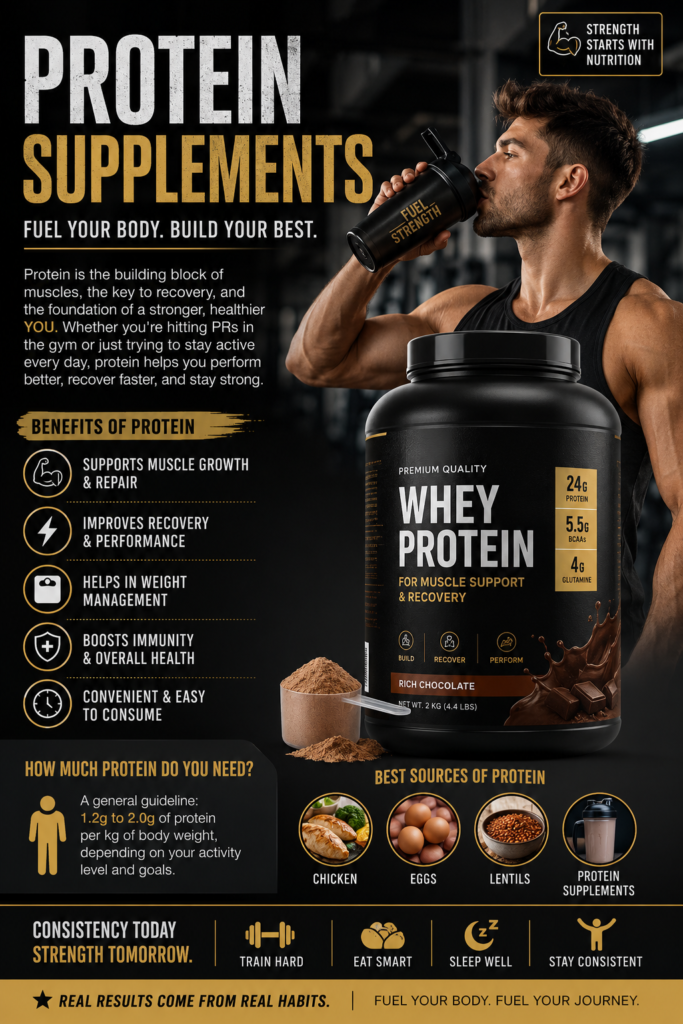
How Much Protein Do You Need?
Protein requirements vary depending on:
- Age
- Activity level
- Training intensity
- Body weight
- Overall health
- Fitness goals
Individuals involved in regular resistance or endurance training generally require more protein than sedentary adults.
Rather than chasing extremely high numbers, focus on consistently meeting your individual daily requirements through balanced meals and, if needed, supplementation.
When Should You Take Protein?
One of the biggest myths is that protein only works immediately after workouts.
The reality?
Your total daily protein intake matters far more than perfect timing.
Many people enjoy protein:
- After workouts
- Between meals
- At breakfast
- Before bed
- During busy workdays
- While traveling
Choose a schedule that helps you consistently meet your daily nutrition goals.
What Makes a Quality Protein Supplement?
Not every protein powder is created equally.
Before purchasing, consider these factors:
✔ High-quality protein source
✔ Clearly labeled nutrition facts
✔ Transparent ingredient list
✔ Appropriate serving size
✔ Third-party quality testing where available
✔ Manufacturing standards
✔ Good taste and mixability
Avoid selecting products based solely on flashy advertisements or unrealistic transformation claims.
Quality and transparency matter.
Common Myths About Protein Supplements
Myth 1: Protein damages healthy kidneys.
Current scientific evidence does not support this claim for healthy individuals consuming protein within recommended ranges. People with existing kidney disease should follow guidance from their healthcare provider.
Myth 2: More protein always means more muscle.
Muscle growth depends on multiple factors:
- Progressive training
- Overall calorie intake
- Recovery
- Sleep
- Genetics
- Consistent nutrition
Protein alone cannot replace proper training.
Myth 3: Protein powder is only for bodybuilders.
Protein supports everyone—from athletes and active adults to older individuals looking to maintain muscle health.
Myth 4: Whole foods become unnecessary.
Whole foods remain the foundation of good nutrition.
Protein supplements are designed to complement—not replace—a balanced diet.
Your Fitness Journey Is Built on Consistency
Results don’t come from a single workout.
They don’t come from one protein shake.
They come from showing up consistently.
Eating well.
Training intelligently.
Sleeping adequately.
Recovering properly.
Making small improvements every single day.
Protein supplements simply make one part of that journey easier.
The Bottom Line
Protein supplementation isn’t about shortcuts.
It’s about convenience, consistency, and supporting your body’s nutritional needs.
Choose products from reputable manufacturers, prioritize balanced meals, train with purpose, and remember that lasting progress comes from sustainable habits—not overnight promises.
Whether your goal is building lean muscle, improving recovery, maintaining an active lifestyle, or simply increasing daily protein intake, the right protein supplement can become a valuable part of your routine.
Fuel your body with knowledge.
Train with consistency.
Recover with purpose.
Because real strength isn’t built in one workout—it’s built one healthy choice at a time.
Why Protein Supplements Have Become a Daily Essential for Active Lifestyles
The growing popularity of protein supplements isn’t just another fitness trend—it’s a reflection of how modern lifestyles have changed. With hectic work schedules, long commutes, and limited time to prepare balanced meals, many people find it difficult to consume enough high-quality protein through food alone. That’s where protein supplements offer a practical and reliable solution.
Whether you’re training for muscle growth, improving athletic performance, losing weight, or simply aiming to maintain a healthy lifestyle, protein supplements can help bridge nutritional gaps. They provide a convenient source of high-quality protein that supports muscle maintenance, post-workout recovery, and overall daily protein intake. When paired with a balanced diet and regular exercise, they become an effective nutritional tool—not a replacement for healthy eating.
One of the biggest advantages of protein supplements is their versatility. They can be enjoyed as a post-workout shake, blended into smoothies, mixed with oats, or even used in high-protein recipes like pancakes and energy balls. This flexibility makes it easier to stay consistent with your nutrition goals, regardless of your daily routine.
It’s also important to choose protein supplements from trusted manufacturers that prioritize ingredient transparency, quality testing, and clear nutritional labeling. Reading the ingredient list, understanding the protein source, and selecting a product that aligns with your dietary preferences can make a significant difference in your overall experience.
Remember, protein supplements are most effective when combined with strength training, adequate sleep, hydration, and a nutrient-rich diet. They aren’t designed to deliver overnight transformations, but they can support long-term progress by helping you meet your nutritional needs consistently. Fitness success isn’t built on shortcuts—it’s built on daily habits, and protein supplements can play a valuable role in those habits by making it easier to fuel your body with the protein it needs to perform, recover, and thrive.
Protein Supplements: Supporting Performance Beyond the Gym
Many people associate protein supplements only with bodybuilders or professional athletes, but their benefits extend far beyond the gym. Protein is an essential macronutrient that supports countless functions in the body, including muscle maintenance, tissue repair, enzyme production, and immune health. Whether you’re an office professional trying to stay active, a student balancing academics and fitness, or someone focused on healthy aging, protein supplements can help you consistently meet your daily nutritional requirements.
One of the greatest advantages of protein supplements is convenience. Preparing protein-rich meals throughout the day isn’t always practical, especially when life gets busy. A high-quality protein shake can be prepared in minutes, making it an excellent option for breakfast, post-workout recovery, or as a nutritious snack between meals. This convenience helps individuals stay on track with their nutrition goals without relying on processed, high-calorie snacks that often provide little nutritional value.
When choosing protein supplements, quality should always come before marketing claims. Look for products that clearly list their ingredients, provide complete nutritional information, and are manufactured in facilities that follow strict quality standards. A trustworthy brand values transparency, ensuring that every serving delivers the protein stated on the label without unnecessary fillers or hidden ingredients. Reading product labels and understanding what you’re consuming is an important step toward making informed nutritional choices.
Another reason protein supplements continue to gain popularity is their ability to fit a variety of dietary preferences. Whether you prefer whey protein, plant-based protein, or lactose-free options, there are formulations designed to suit different lifestyles and nutritional needs. This accessibility allows more people to enjoy the benefits of increased protein intake without compromising their dietary choices.
Consistency is one of the most overlooked aspects of fitness and health. A single workout or one protein shake won’t transform your body overnight. Lasting results come from repeating healthy habits day after day. Protein supplements support that consistency by making it easier to consume adequate protein, even on your busiest days. They simplify nutrition, reduce the stress of meal planning, and help you maintain momentum toward your fitness goals.
It’s equally important to understand that protein supplements work best when they’re part of a complete wellness routine. Resistance training stimulates muscle growth, while protein provides the building blocks needed for repair and recovery. Quality sleep, proper hydration, regular physical activity, and a balanced diet all work together to create sustainable progress. Supplements are designed to complement these healthy habits—not replace them.
Many people also underestimate the role protein plays in healthy aging. As we grow older, maintaining muscle mass becomes increasingly important for mobility, strength, and overall quality of life. Meeting daily protein needs can help support muscle preservation alongside regular physical activity. This makes protein supplements a practical option not only for athletes but also for adults looking to maintain an active and independent lifestyle.
The science behind protein nutrition continues to emphasize the importance of meeting daily protein requirements rather than focusing on quick fixes or extreme diets. Instead of chasing unrealistic promises, prioritize products backed by quality manufacturing practices, evidence-based nutrition, and transparent labeling. A well-formulated protein supplement should provide confidence in what you’re consuming while helping you achieve your long-term health and fitness objectives.
Ultimately, protein supplements are about making good nutrition more accessible. They help remove barriers created by busy schedules, demanding careers, travel, and changing lifestyles. Combined with smart training, balanced eating, and consistent effort, they become a valuable tool that supports recovery, performance, and overall well-being. Your fitness journey is built one workout, one meal, and one healthy decision at a time—and protein supplements can help make each of those decisions a little easier.
Follow on facebook- http://www.xyz
For more information on this topic visit about us- druv.online